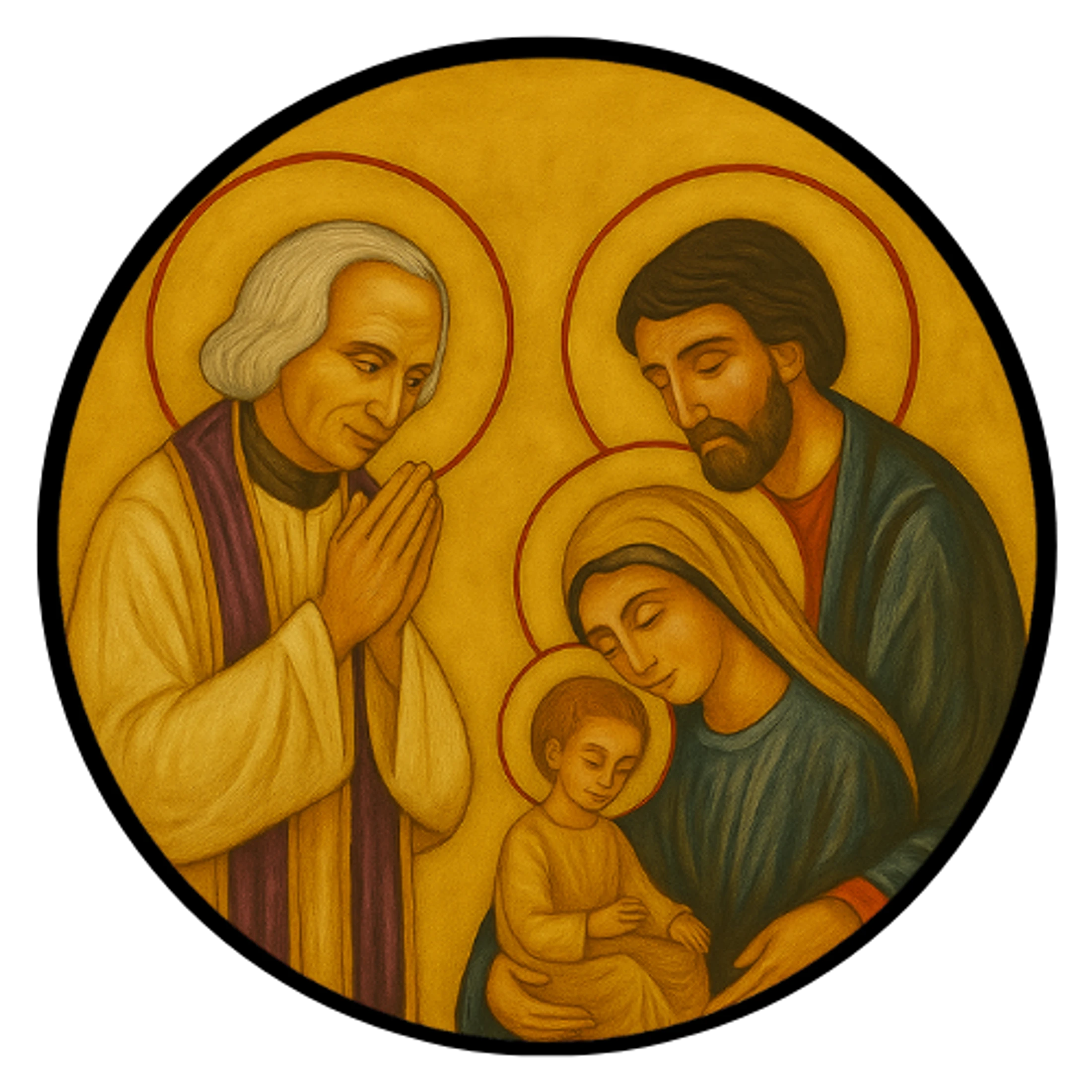
The first key decision has been made ...
My dear Kirkland Catholics,
As a first important note I want to say clearly that I am not one bit discouraged about where we are as a parish family to date. I am excited about what God is up to and what I believe He desires to accomplish in the coming years. I say that with all my heart, I am not merely trying to “cheerlead.” Some of the following commentary may come across as heavy, but we are endeavoring to be really honest and name the challenges, avoiding being naïve. The Lord is doing some beautiful things, but to respond and cooperate we have to live in reality.
What follows is an update on our work to present a One Parish Plan to Archbishop Etienne in 2027. It has been over eighteen months since the Parishes of Kirkland formally entered our renewal effort known as Partners in the Gospel. As we all know, a parish is not a consumer service organization; it is a spiritual home, where faith, memory, and relationships are woven together over time. For that reason, changes in leadership and in the patterns of parish life can sometimes feel like an unraveling. I think we all understand that even ordinary pastoral transitions can be difficult – and these are not ordinary times.
No update can resolve every question or anticipate every concern; but because our upcoming discernments touch not only systems and buildings, but our faith and our future, I thought they deserve more than a mere update. So, this letter also offers some wider perspective on our work together to strengthen and preserve Catholic life in Kirkland. I encourage you to read what follows unrushed – even if only in parts – in a time and place proper for reflection and prayer. Know that wherever your reflections may lead, we can all hold to the certain knowledge that God is already at work in our midst. The same Christ who calls His Church in every age has also promised to remain with her always (cf. Mt 28:20).
With love in Christ,
Fr. Brad
Taking Stock Together. It surprised many of us just how demanding even a so-called “quiet” initial phase of coming together could be. Over the past eighteen months, much of our time was devoted not to making changes, but to understanding — our people, our ministries, and the daily rhythms of parish life. That work takes patience.
At the same time, with fewer priests now serving the Parishes of Kirkland than before, simply maintaining the existing schedule of Masses, confessions, and pastoral care across two sizable church locations has required substantial effort. Some of that strain has been visible; much of it has not.
Seeking understanding is demanding work. While knowledge gained through experience is invaluable, it does not come quickly. We have learned that even simple questions can have complex answers — shaped by years of local custom, the availability of volunteers, and broader cultural shifts, all still marked by the effects of a pandemic.
Saint Augustine reminds us that the first movement of conversion is to “enter into your own heart and see there what you are.” This kind of honest self-knowledge serves two purposes. First, it serves Love: for we cannot love what we do not know — whether that be ourselves, our parish, or our Creator. Second, it serves Truth: for only by clearly seeing our strengths and weaknesses, our gifts and our needs, can we make wise decisions about the future.
Beyond what can be learned through experience alone, our Parish Family Advisory Council (composed of an equal number of members from each campus) has worked carefully to assemble a solid foundation of information to guide discernment. This includes clear data about our facilities, finances, and sacramental life, along with an extensive household census and nearly 1,300 parishioner surveys. These insights were further enriched by many personal conversations — including nearly 50 Friday evening “Meet & Greets” with our priests, and twenty-two listening sessions held this past fall.
We are sincerely grateful to the many parishioners who shared their time, reflections, and hopes in this process. These were not merely administrative tasks, but genuine acts of communion. As a result, we now have a clearer and more complete picture of our parish family — one that will allow future decisions to be grounded more firmly in truth and hope, rather than uncertainty and anxiety.
Prepare the Way of the Lord. In the Gospels, Saint John the Baptist appears not with a detailed plan, but with a clear call: prepare. His task was not to decide what the Messiah would do, but to remove what stood in the way of the Lord’s coming. He called people back to the essentials — repentance, humility, and readiness of heart.
As we take stock of our parish mission, we are reminded that it is not something we invented. It was given to us. Our purpose comes from Christ Himself, who charged His Church to make disciples of all nations (cf. Mt 28:19). This mission draws human hearts toward healing, conversion, and a mature life of faith. We cannot change that mission any more than we might set it aside.
Our task in this season, then, is not to brainstorm a new identity, but to rediscover and renew what has been entrusted to us — to clear away what distracts or weighs it down, and to become a more faithful instrument through which the Church can teach, sanctify, and guide the People of God. For this reason, some of our earliest efforts focused plainly on unity and simplification.
Other preparations have been more visible, especially in strengthening the foundations of parish life. Nothing of lasting value can be accomplished without God’s grace. With that in mind, we have given renewed attention to prayer and devotion across our parish family — fostering intercessory prayer, Eucharistic Adoration, and Marian devotion.
In June, our entire parish family was consecrated to Jesus through the Immaculate Heart of Mary. In doing this, we deliberately placed our work under the care of the Mother of the Church, trusting that she will help us to “do whatever He tells you” (Jn 2:5).
Alongside prayer, we have also returned to essentials. This meant revisiting core questions: What does it mean to be a disciple? What is the universal call to holiness? What does it look like to follow Jesus Christ in ordinary life?
These themes were explored through preaching, including three homily series, as well as in hosting The Rescue Project, which invited parishioners during last year’s Lent to encounter Christ’s saving mission in a more personal and intentional way. We also began to make room for retreats as moments of focused conversion — launching a new annual youth retreat to Alaska, a three-night Parish Mission for adults, as well as our upcoming marriage retreat in May.
These are not isolated events. Taken together, they reflect a deliberate posture of preparation rather than haste. In this way, the Lord has already been at work among us — quietly and steadily — forming people capable of discernment, trust, and faithful response to His grace.
Our parish family is preparing the way by renewing the mission Christ entrusted to His Church (cf. Gospel of Matthew 28:19) through prayer, unity, and discipleship.
Stepping into Discernment. Having taken the time to understand ourselves and to prepare the spiritual soil, we now enter the year 2026 ready to begin discernment: Phase 3 of the One Parish Plan — Who Do We Want to Become? If nothing of lasting value can be accomplished without God’s grace, it is equally true that our vision will be dimmed and our plan badly enfeebled by poor discernment.
Discernment is not about asserting our wishes, but about learning to listen. It asks for patience, humility, and a willingness to set aside our own assumptions so that Christ may guide His Church. Saint John the Baptist captured this posture most clearly: “He must increase, but I must decrease” (Jn 3:30). Only with this spirit can we begin to see what God desires for us.
With this in mind, we will prayerfully begin to form a clearer picture of what the Lord is asking of us in our particular circumstances. Alongside this vision, we will identify a small and focused set of priorities to help move us in that direction. This is not an attempt to reinvent the parish, nor to improvise something new. Rather, it is holding to what the Church has always understood a parish to be.
This work will give careful attention to what matters most: the Sunday experience together with faithful care for the Sacraments; clear and welcoming paths for healing and conversion; sturdy formation in every stage of life; and gladly witnessing God’s great charity for self and others. In other words, we are not searching for slogans and gestures, but a concrete way of life: one fully alive.
Early Discernments. After months of listening, study, and prayer, the Parish Family Advisory Council has entered into the work of discerning the proper path ahead. One vital determination in that regard has already been made: now is not the time for closing either of our two church campuses. Both Holy Family and Saint John Mary Vianney stand to remain viable expressions of the Church’s mission in Kirkland.
That decision was not made lightly, nor should it be misunderstood as a sign that we are exempt from the challenges facing the Church in Western Washington. Many parish families across the Archdiocese are experiencing far greater financial, pastoral, and sacramental strain. While we are more fortunate than some, we are not untouched by the broader patterns of decline. The information we have gathered makes that clear.
What God has given us is not immunity, but time — and with that time, a greater responsibility. The status quo is no longer sufficient for us, just as it is no longer sufficient elsewhere. Yet we are blessed with room to act, real options to weigh, and choices to steward wisely.
We were not promised easier days; we were given these. Our holiness will not be gained through comfort or cleverness, but through fidelity — committing our lives as vocations offered to God. For this reason, we are invited to ask not, “What are we losing?” but rather, “What kind of parish must we become?”
These are the times God has entrusted to us. His providence has put this place, this moment, and this work into our care. And we aim to rise to this occasion together — with Christ showing the way, and all the humility and courage we can lend one another to follow. We therefore pray for a parish environment where discipleship is strengthened, and vocations are given meaningful accompaniment — that we may be made worthy of the promises of Christ.
Faithful Perspective
This moment is also a good time to take a sober look at the wider context that surrounds our planning. If some of what follows feels weighty, that is understandable. These are not light matters, and the Church has never pretended they were. But it has been a common misunderstanding that the parish consolidations under Partners in the Gospel are simply a response to a shortage of priests in the Archdiocese of Seattle. While that shortage is real and affects us directly, it is better understood as only a symptom of deeper problems.
Catholic life in the United States has been weakening for decades. Fewer people now identify as Catholic, and the fastest-growing group in religious surveys is those who assert no religious affiliation whatsoever. Even more concerning are trends among those who still call themselves Catholic. Fewer attend Mass regularly. Fewer take part in the sacraments. Fewer hold confidence in the Church’s teachings on faith, morals, and the meaning of the Christian life. Christendom — as civilization being shaped and agreeable to Christian belief — is no longer our reality. To be sure, the pandemic did not create these struggles, but it did intensify the falling away and lay bare just how fragile our habits of worship and communion had become.
All of this has contributed to American Catholics feeling stretched thin, worn down, and outmatched — as if 70 million Catholics are somehow hopelessly outnumbered. Our situation is admittedly serious and deserves honest attention; but it is no reason for despair. In fact, in only our second year of having been formed into a new parish family, there is real cause for encouragement.
Confusion
There are a fair number of people who would say that the Church today is more opposed by the world than at any other time in history. We do not refute them; but we do not mean to say that our times are particularly corrupt — all times are corrupt. Every age has struggled with confusion, compromise, and moral failure. This is because every age is shaped by fallen men and women, and because the Gospel has always challenged the world rather than affirmed it.
This helps to explain why so many of our saints are also martyrs. They are mistaken for poison precisely because they are antidotes — trying to exaggerate whatever the world is wrongly neglecting. So it is for the many unpopular stands of the Church today against those experiments which try to set foundations apart from faith — and, increasingly, apart from reason.
For all of its technological progress, modern life seems no better able to satisfy the human heart. On the contrary, perhaps nowhere have ignorance, error and deceit been on greater display than in this so-called Information Age.
Many people — and especially our youngest — are struggling to find lasting meaning and direction for their lives. They are encouraged toward radical self-rule — to ‘be yourself’ with little authentic guidance on what is truly good or worthy of commitment. Liberty, in the Christian conception, is not freedom to do as one wants, but rather the freedom to do as one ought — ordered toward a proper end, which is God.
Injury
Indeed, much in our world today causes real harm — not only through wrongdoing, but through the disorientation that surrounds it. For this reason, the Church must remain particularly patient and steady, attentive to renewal and equipped to care for the dazed and wounded. This by no means diminishes the Church’s teaching mission — rather, it reminds us that our work must be offered in a way that heals as well as instructs.
Pope Francis sometimes presented the Church as a “field hospital after battle.” Such an image captures something essential about our moment. We are speaking to people who are wounded by sin — often suffering real pain in the form of hopelessness, powerlessness, undue fear, undue shame, rejection, or abandonment in the midst of our confusions.
This way of understanding the Church is not new. In fact, to treat the Parable of the Good Samaritan (Lk 10:25-37) as little more than an appeal to ‘be nice to strangers’ is a modern reduction. The Church Fathers saw a deeper meaning: the Samaritan (Christ) — reviled as an outsider — cares for the man (Adam, or ‘humanity’) beaten and left for dead. He binds the man’s wounds (sin), pours out oil and wine (the sacraments), and carries him to the inn (the Church) to be entrusted to the innkeeper (a pastor) until his return (the Second Coming).
The Church continues Christ’s work to rescue, restore, and accompany humanity on the journey home. Of course, this work has never been easy. But then, Christians are people seeking peace, not ease. As C.S. Lewis once remarked with his characteristic clarity: “I didn't go to religion to make me happy. I always knew a bottle of Port would do that. If you want a religion to make you feel really comfortable, I certainly don't recommend Christianity.”
Hope
We must bear the hardships of our age as others have had to carry theirs. Here the theological virtue of hope takes its proper place and role in Christian life. Hope is not optimism that rests on
circumstances: rather, hope lives in the victory the Lord Jesus has already won for us — a victory still capable of touching every aspect of the lives of those who are faithful to Him.
Our participation in His victory is realized not only in spite of suffering, but often through it: when we unite our suffering to Jesus and allow it to become a principal instrument of our ongoing sanctification. In other words, it is Christ’s desire to bear our hardships with us — knowing full well that none of us can come to Easter Sunday except through Good Friday. That is the meaning of the Paschal Mystery.
Instrumental Fortitude
Let us acknowledge that comfort and ease have never been good soil for strong faith. Over time, luxury and leisure can quietly convince us that the world is enough on its own, that we can live well without conversion — that the Cross is optional. But Christianity only truly makes sense where sin is named, wounds are acknowledged, and grace is sought. The Catholic faith is not a religious attire or recreation; it is medicine offered to those who know they are sick.
In times when the Church grows complacent, God in His mercy allows her to be unsettled — not to punish her, but to awaken her; not to diminish our lives, but to purify the order of our loves. Our Lord speaks directly to this reality: every branch that bears fruit is pruned “that it may bear more fruit” (Jn 15:2).
Learning to accept being challenged with purpose is where humility becomes spiritual strength. Humility acknowledges that we are not called to ‘save the Church.’ We are called to a simple fidelity: to form disciples with patience and courage, to worship God rightly, to receive and live His sacraments, and to love one another for God’s sake. And, if we mean to do so joyfully, “always ready to give an answer to anyone who asks you for a reason for the hope that is in you” (1 Peter 3:15).
Consolation
Even now, we can see some signs of hope. More people are recognizing the disorder around them and longing for something solid, sane, and lasting on which to build their lives. Recent evidence suggests that an increasing number seem to be investigating the enduring truths preserved by the Catholic faith.
The Christian Faith holds a logical superiority over any other account of ultimate reality. It stands or falls on a single, public claim about who Jesus of Nazareth is: not a prophet or philosopher, but God incarnate — “come into the world, to bear witness to the truth” (Jn 18:37). If that claim be true, then the full deposit of the Christian faith can in no way be one option of many but is God’s binding self-disclosure to man. As C.S. Lewis memorably put it: “Christianity, if false, is of no importance, and if true, of infinite importance. The one thing it cannot be is moderately important.”
Faith is not merely a set of ideas to like or approve, but the means of a living friendship with God. Religion then, properly understood, becomes about giving God what is rightly His — our lives — by virtue of Justice.
Seen in the light of these perspectives, Partners in the Gospel can never be reduced to an administrative reshuffling. It is a summons back to essentials: to God’s will and to reforming parish communities capable of sustaining authentic Christian living as a vocation for generations to come. And on that final note, we come to fully see that a proper parish plan must be judged not so much as a thing for us, but as our duty to those who come after us.